
As the year winds down, communities have an opportunity to reflect on what has been accomplished,
and think strategically about what comes next.
Whether you are preparing for new housing, looking for data to support grant applications, responding to changing community needs, or simply have a big idea but aren’t sure where to begin, planning can help turn goals into a clear path forward.
CEDA’s planning team works with communities and organizations to identify priorities, gather meaningful input, analyze local conditions, and develop practical strategies for moving forward.
Why Plan?
Communities are constantly changing. Planning provides a framework for making thoughtful, informed decisions rather than reacting to change as it happens.
- Anticipate potential challenges before they arise
- Align investments with community priorities.
- Use data and community input to inform decisions.
- Make informed decisions using data and community input.
- Create a shared vision for the future.
- Position your community for funding and development opportunities.
Start With Your Goals
The right planning tool starts with a simple question:
What does your community need to accomplish?
Some communities know exactly what they need. Others know there is a challenge or opportunity but need help determining the best way forward.
CEDA’s planning team primarily works across three planning tools, each tailored to the community or organization:
Types of Plans
- Comprehensive Plans – For communities looking at the big picture.
Comprehensive plans establish a shared vision for the future and provide guidance for growth, development, land use, housing, transportation, community facilities, and other key community priorities.
- Housing Studies – For communities focused on understanding and addressing housing needs.
Housing studies combine local data, market information, and community input to identify housing needs and opportunities. The findings can help communities prioritize actions, communicate with developers, and strengthen grant applications.
- Strategic Plans – For organizations and communities ready to turn priorities into action.
Strategic plans establish a clear vision, identify critical priorities, and develop actionable strategies. They can address both immediate needs and longer-term goals while providing a framework for implementation.
For example, strategic plans can help communities and organizations:
- Prioritize community facility improvements
- Set goals for supporting local businesses
- Identify strategies for community growth
- Turn broad priorities into actionable steps
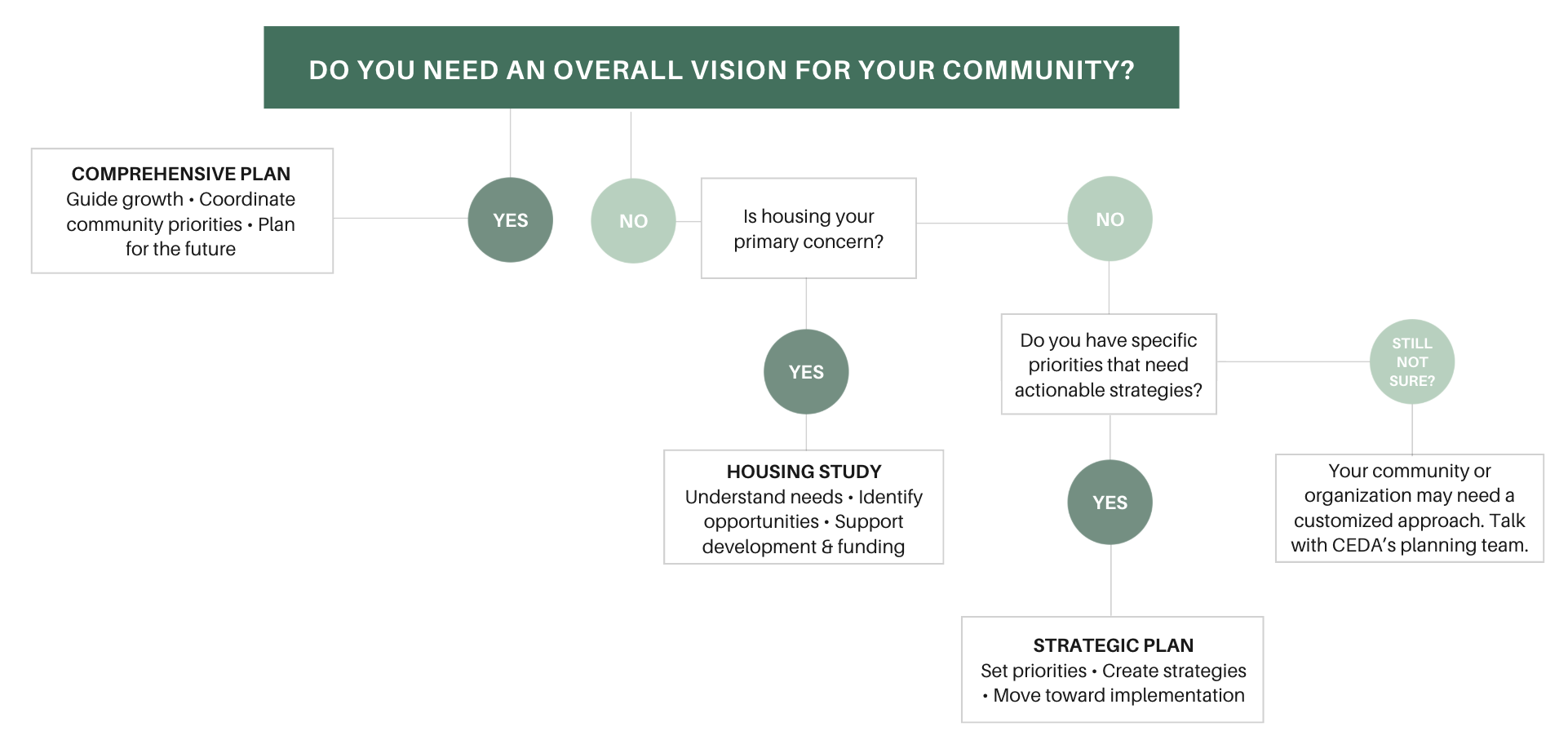
Which Planning Tool Is Right for You?
Use the questions below to help identify where to start.
Prioritizing Community Engagement
Good planning starts with listening.
CEDA designs engagement strategies that connect with residents, stakeholders, and community leaders to better understand local priorities and ensure plans reflect the people they serve.
- Engagement Methods
- Community Surveys
- Public Workshops
- Stakeholder Interviews
- Focus Groups
- Youth Engagement Activities
The right approach depends on the community, the project, and the questions that need to be answered.
Do You Have the Capacity to Plan?
Planning takes time and, for many smaller communities, adding a major planning effort to an already full workload can place additional pressure on staff, elected officials, and volunteers.
If your community has limited capacity, has not updated a plan in several years, or needs an outside perspective, contracting with a planning team can help move the process forward without adding the entire workload to your existing staff.
CEDA’s planning team can help by managing the process from start to finish, from data and engagement to recommendations and implementation.
Not Sure Where to Start?
You don’t need to have a plan figured out before you reach out.
Start with the goal. We will help you determine the right path forward.
Contact CEDA’s planning team to talk through your community’s needs, opportunities, and next steps.
Contact CEDA’s Planning Team: planning@cedausa.com
